 01
A clear starting configuration
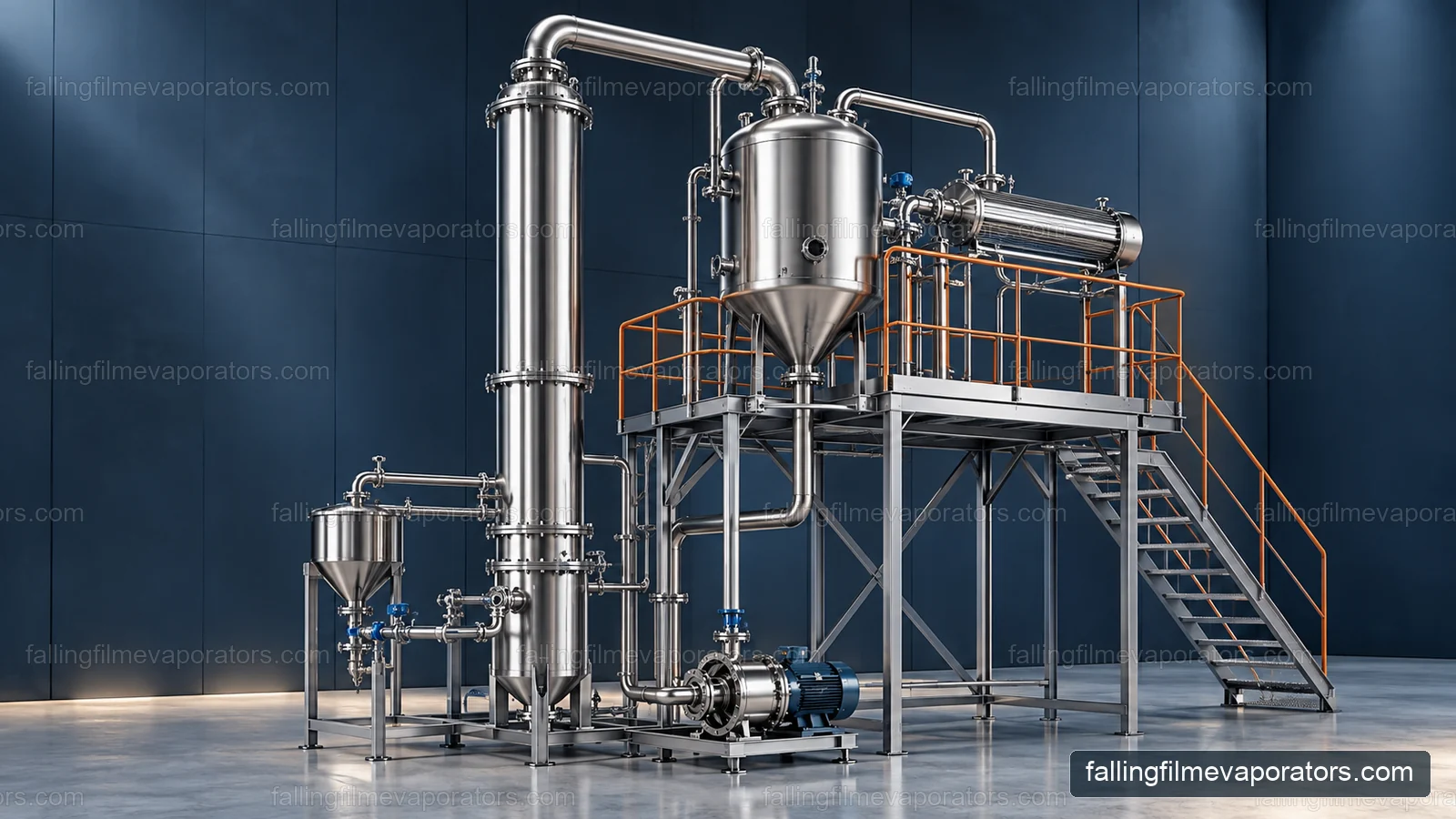
Single-effect falling film evaporator
One effect gives a relatively direct product path, fewer inter-effect connections and a simpler temperature profile to review.
Compare this configurationFOOD-LIQUID CONCENTRATION / FALLING FILM
Short product hold-up · Controlled vacuum evaporation · Continuous surface wetting
Start with measured viscosity, suspended solids and fouling tendency. Falling film is a candidate for low-viscosity liquids when continuous wetting can be maintained; concentrated, fibrous or crystallizing feeds need a closer review.
Concentrate the product.
Understand the duty.
Juice, filtered extracts and liquid food ingredients each bring different distribution, viscosity, fouling and quality requirements. Select the equipment against those conditions, not a feed-flow figure alone.
Check whether falling film fits your liquid ↗Effect count and vapour recompression solve different parts of the energy question. Compare the arrangements on the same product and operating basis.
01One effect gives a relatively direct product path, fewer inter-effect connections and a simpler temperature profile to review.
Compare this configuration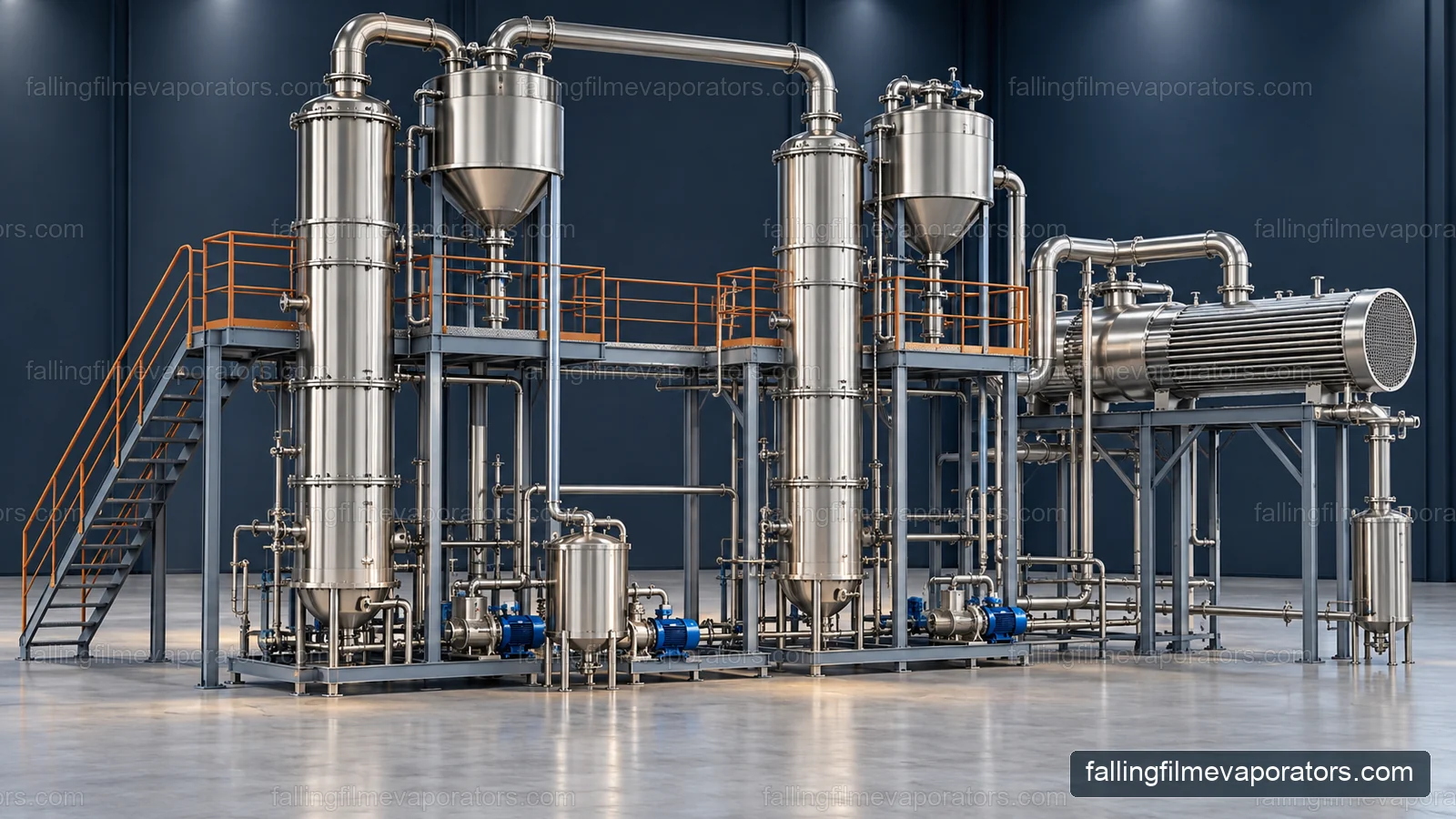 02
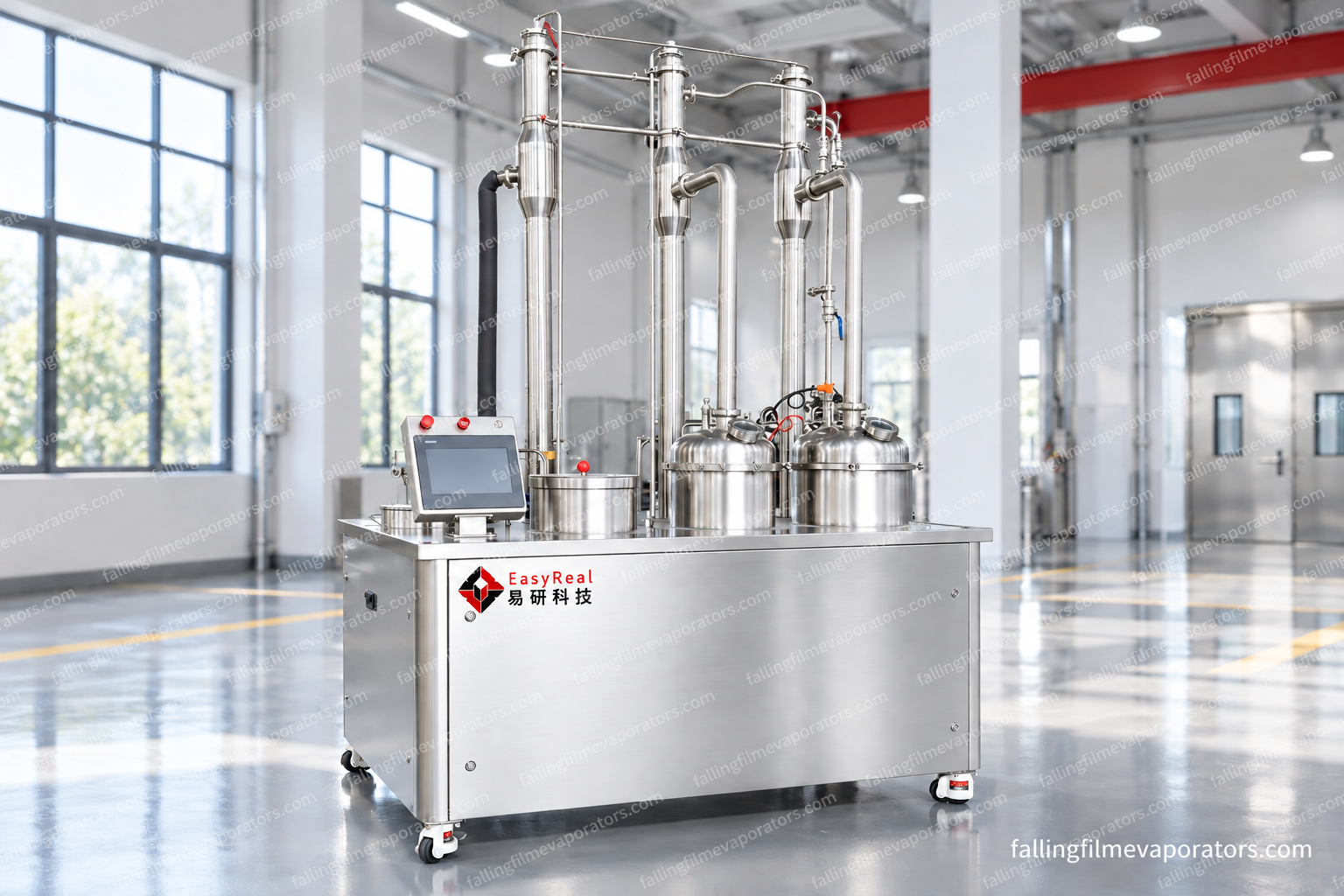
Compared with one effect, two effects introduce additional heating surfaces, piping and pressure-control interactions.
Compare this configuration03Increasing the number of effects can reduce external heating demand under a suitable design, while adding equipment, piping and control requirements.
Compare this configuration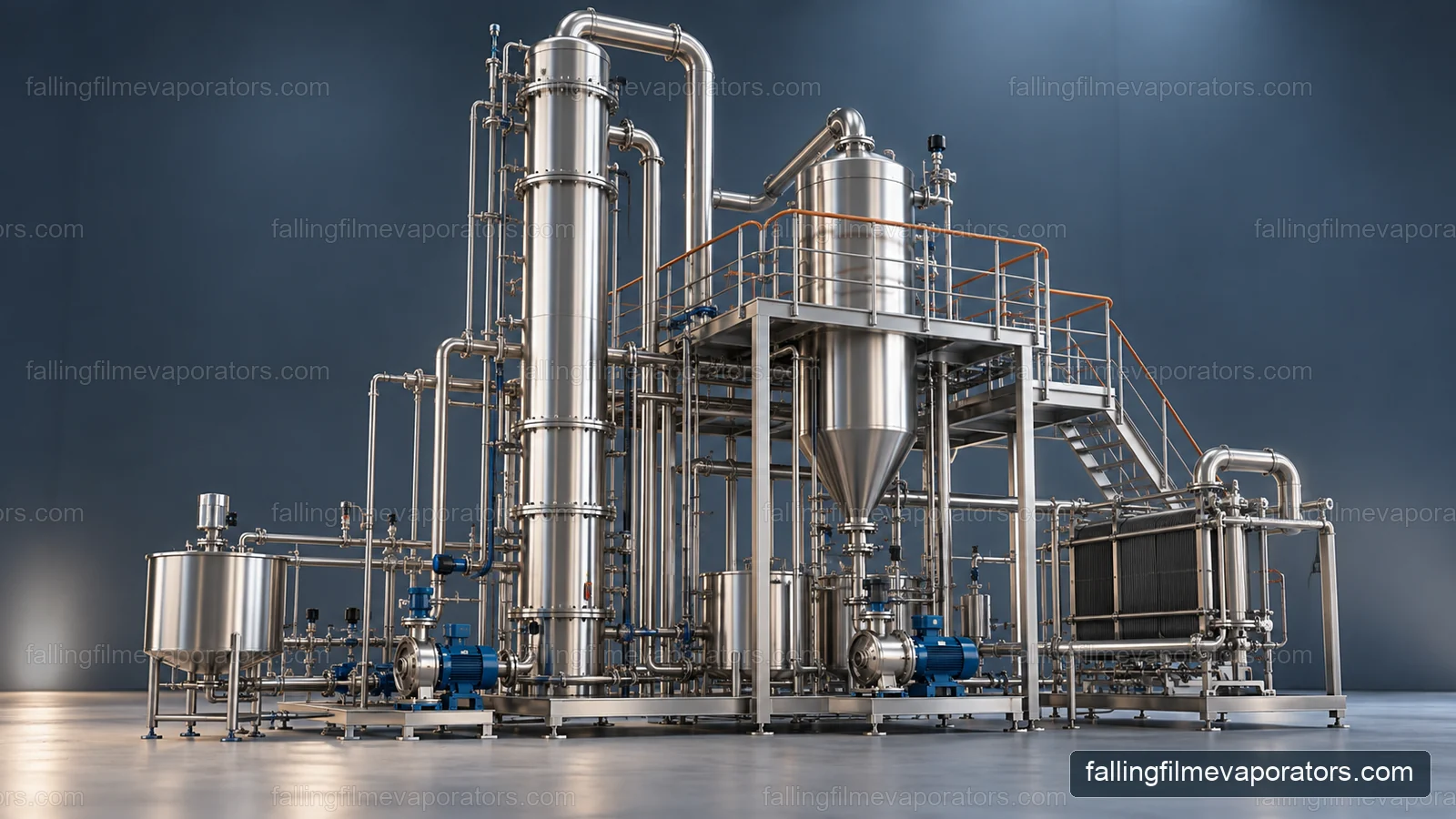 04
An MVR proposal moves a significant part of the energy discussion toward electricity and compressor operation.
Compare this configuration05TVR avoids the mechanically driven vapour compressor used in MVR, but depends directly on steam conditions and a compatible operating envelope.
Compare this configurationConfiguration illustrations are AI-generated; they are not photographs of supplied equipment.
Clarification, soluble solids and aroma objectives guide the equipment review.
Read the engineering basis ↗APPLICATION & SELECTIONEvaluate deposits, temperature exposure and the concentrate properties.
Read the engineering basis ↗APPLICATION & SELECTIONBring formulation, rheology and hygienic handling into the duty.
Read the engineering basis ↗Distribution, heat transfer and separation are the core of a working falling-film evaporator. The vacuum, pumping and controls must support that same duty.
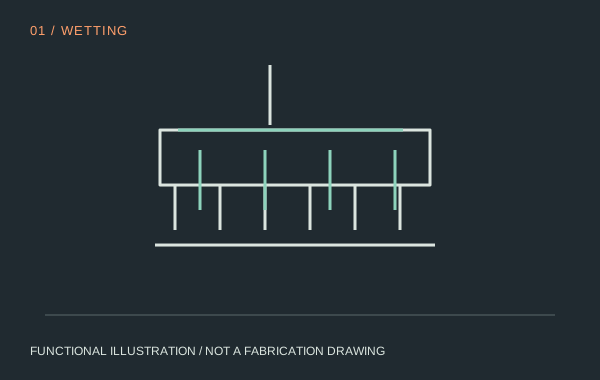 01 / WETTING
Establish an even film before adding heat.
Structure & selection →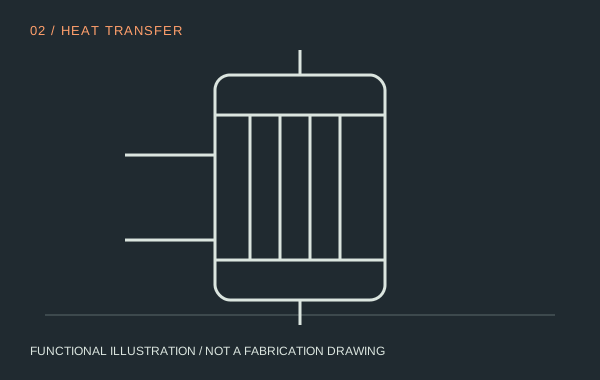 02 / HEAT TRANSFER
Transfer heat through a continuously wetted surface.
Structure & selection →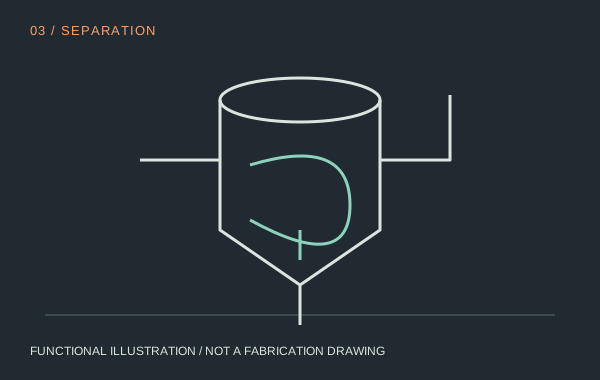 03 / SEPARATION
Keep product droplets out of the vapour path.
Structure & selection →At 1,000 kg/h feed, concentrating from 12% to 60% solids gives a calculated 800 kg/h of water removal. That balance is a starting requirement, not a rated machine capacity.
Read the capacity specification guide ↗Feed, concentrate, water removal and product properties stated together.
Heating, vacuum, product handling, controls and cleaning inclusions identified.
Measured operating conditions, product-quality checks and a defined test method.
Tell us the liquid, feed rate and concentration target. Add the utility conditions you know; we will identify what needs further review.
Compare falling film, forced circulation and rising film Check suitability and running cost →
Published shipping record: a multi-effect falling-film unit for citrus concentration. Operating life, measured energy consumption and final concentration are unverified.