Feed spreads over the active tube entrances. Review particles, inlet temperature and minimum load.
View the module →How a falling film evaporator works
Follow three separate streams: the product film, the heating medium and the generated vapour.
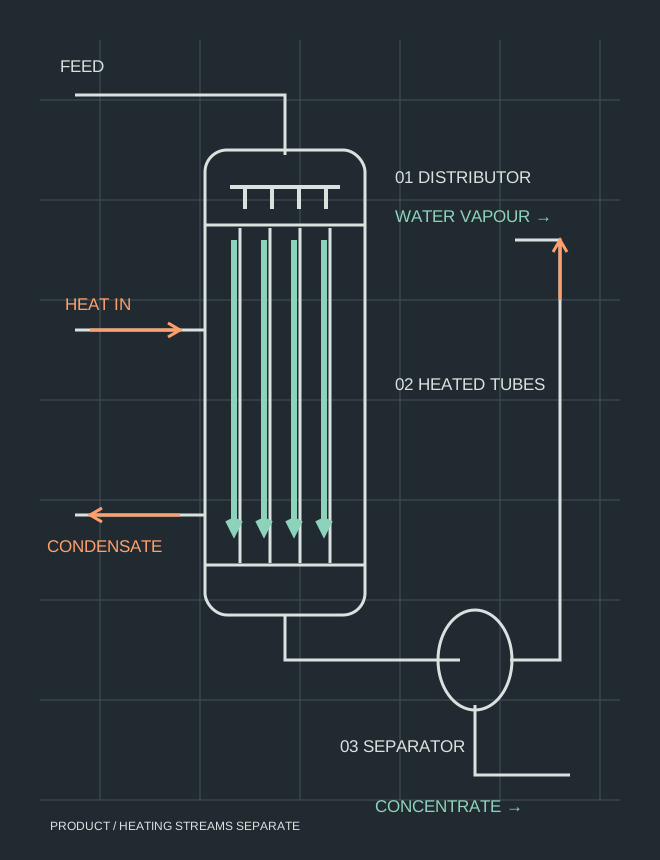
FOLLOW THE LIQUID / 01—04
Heat crosses the tube wall. Water leaves the descending film while the remaining liquid becomes more concentrated.
View the module →Divide concentrate from generated vapour. Carry-over matters to product recovery and downstream heat equipment.
View the module →Condensation and non-condensable removal support the chosen pressure. Cooling-water conditions belong in the design.
View the module →Start at the distributor
Feed enters above the vertical tubes. The distributor spreads liquid across the tube entrances. A design review should begin with this inlet condition, because heat-transfer area is useful only where the product maintains contact with it.
Follow the film downward
Liquid flows on the internal tube wall. Heat crosses from the heating side and part of the water changes into vapour. The remaining liquid becomes more concentrated as it moves through the system; its viscosity and boiling behaviour may change.
Separate before recovering heat
At the heating-section outlet, the liquid and vapour paths divide. Concentrate goes toward the next effect or discharge, while vapour can heat another effect, enter a recompression scheme or reach a condenser. Separation quality protects both yield and downstream equipment.
Review the complete thermal history
Short passage through a tube is only part of the exposure. Preheaters, separators, recirculation, holding vessels and shutdown conditions all contribute. Define product acceptance by a measurable quality outcome and a complete flow arrangement.