TVR falling film evaporator for food liquids
TVR falling film evaporators using thermal vapour recompression. Review motive steam, suction vapour, discharge pressure, turndown and effect arrangement.
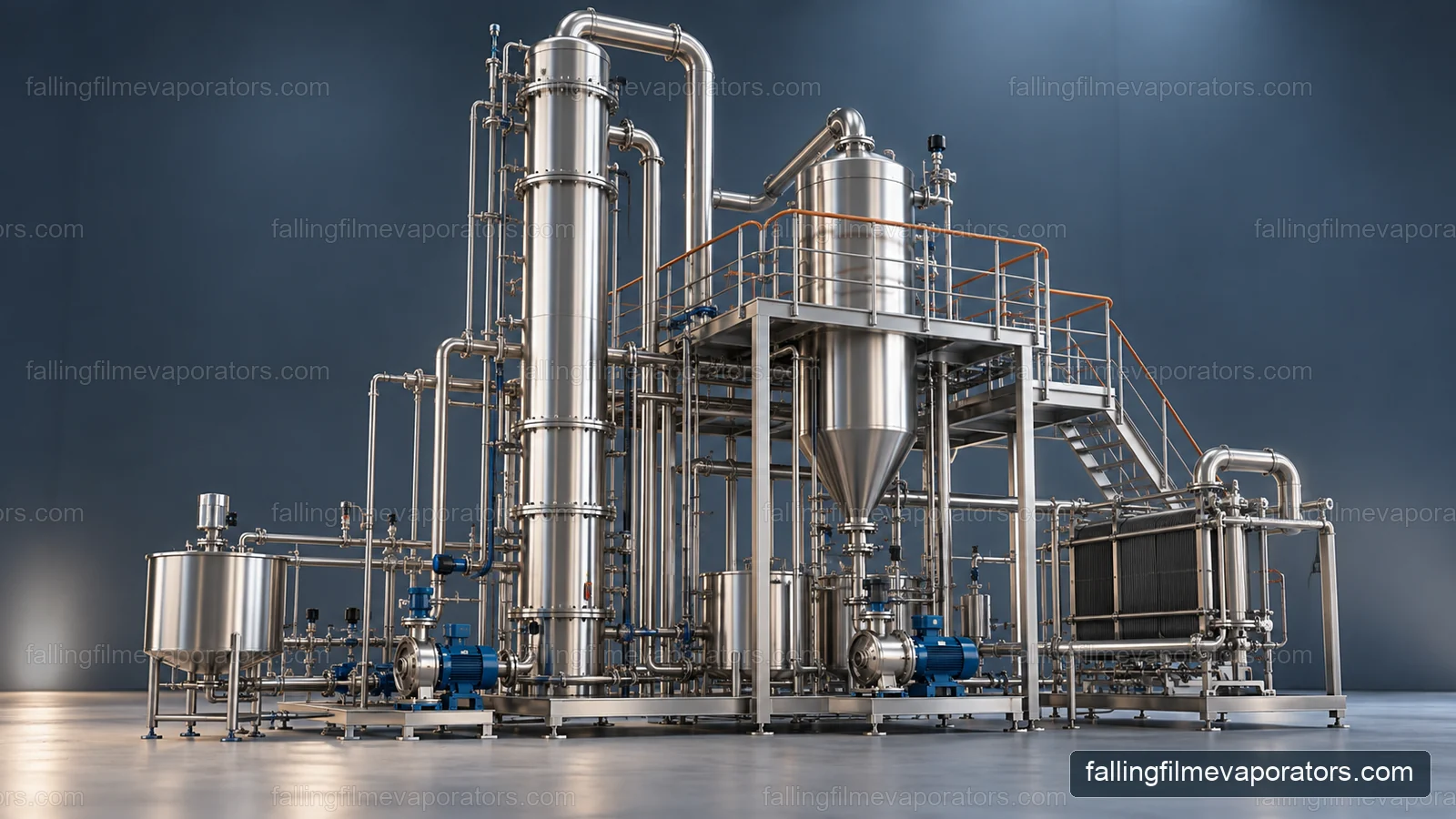
Where this arrangement fits
TVR can be evaluated when a suitable motive-steam supply is available and some process vapour can be recovered at useful conditions. The steam supply needs a measured pressure and quality basis. TVR and multiple effects are separate design dimensions and may be considered together.
Discuss this configuration ↗Start with feed kg/h, inlet and final concentration, operating hours and utilities.
How the arrangement works
A steam-jet thermocompressor uses motive steam to entrain lower-pressure vapour. The combined stream supplies heat at a higher pressure than the suction vapour alone. The achievable operating point depends on motive pressure, suction conditions and discharge pressure; it cannot be selected from the evaporator feed rate alone.
Explore distribution, heat transfer and separation ↗What changes in the equipment decision
TVR avoids the mechanically driven vapour compressor used in MVR, but depends directly on steam conditions and a compatible operating envelope. A comparison must state the recovered vapour fraction, motive-steam requirement, pressure levels, operating hours and control strategy. Low-load performance may differ from the normal design point.
Specify these conditions
- Available motive-steam pressure, quality and variability
- Suction-vapour flow, pressure and non-condensables
- Required discharge pressure and usable temperature lift
- Normal-load and low-load thermocompressor operation
- Effect count, condensate handling and vacuum interfaces
Confirm the feed distributor, heating surface, separator, vacuum interfaces, concentrate pumping and cleaning provisions against the normal and minimum loads. A proposal should state the inclusions and exclusions explicitly.
Prepare the utility information ↗A common selection question
Is TVR the same as a multiple-effect evaporator?
No. TVR describes vapour recompression; effect count describes heat reuse between evaporation stages. The two choices should be specified and reviewed separately.
From configuration to a project proposal
Send a representative product description and the operating data you have. The engineering review should resolve suitability, heating area, temperature profile, materials and utility consumption before a model or guarantee is agreed.
Ask for identified equipment photographs, dimensional drawings and a rated duty in the proposal. Acceptance should cover the agreed operating and product-quality conditions; successful enquiry submission is not equipment approval.