 01
A clear starting configuration
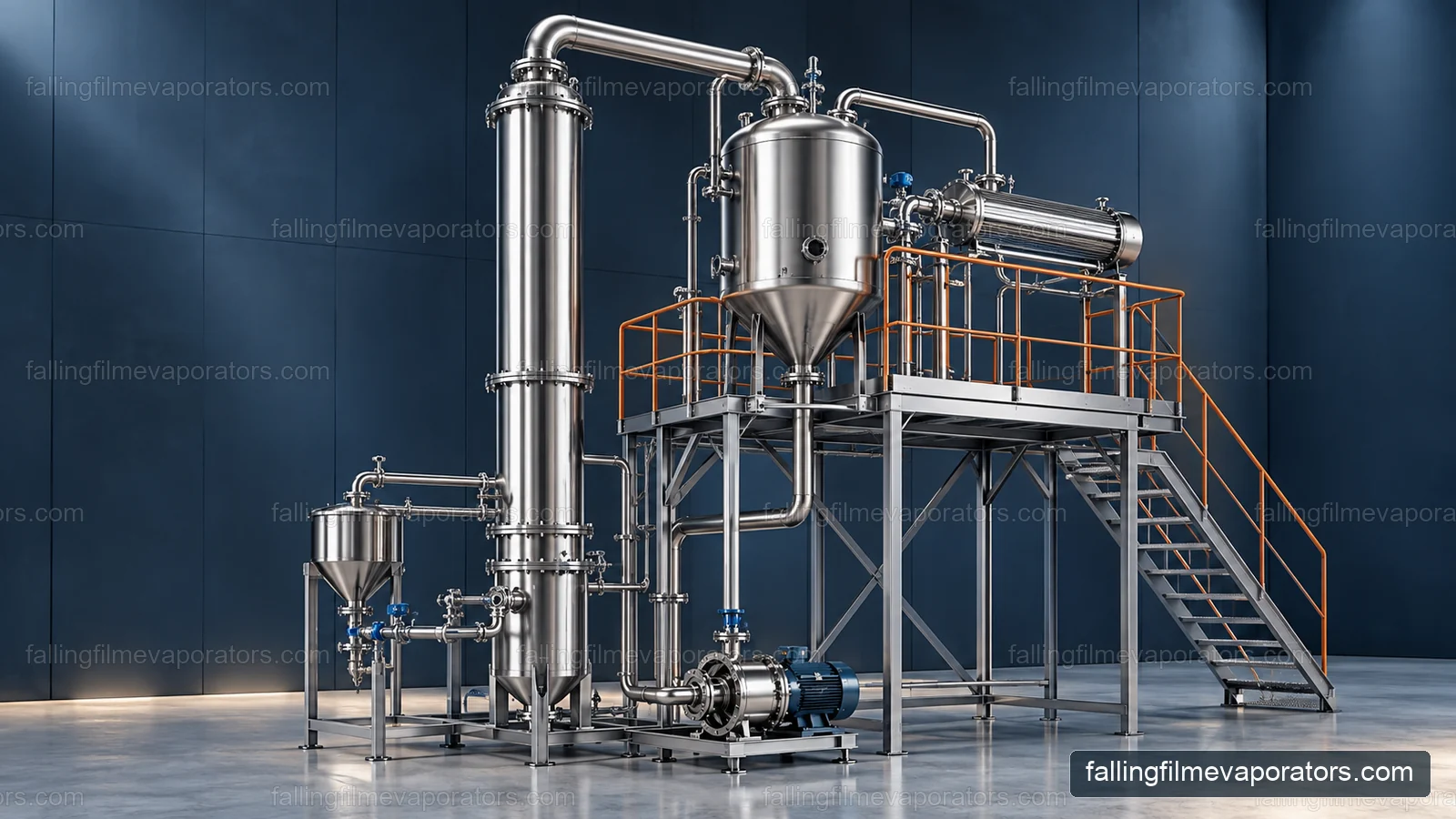
Single-effect falling film evaporator
One effect gives a relatively direct product path, fewer inter-effect connections and a simpler temperature profile to review.
Compare this configurationCompare falling film evaporator configurations for food liquids. Review effect count, heat recovery, product suitability and the data needed for a proposal.
A single effect, several effects and vapour recompression are choices to evaluate against your product and utilities. They are not interchangeable capacity labels.
01One effect gives a relatively direct product path, fewer inter-effect connections and a simpler temperature profile to review.
Compare this configuration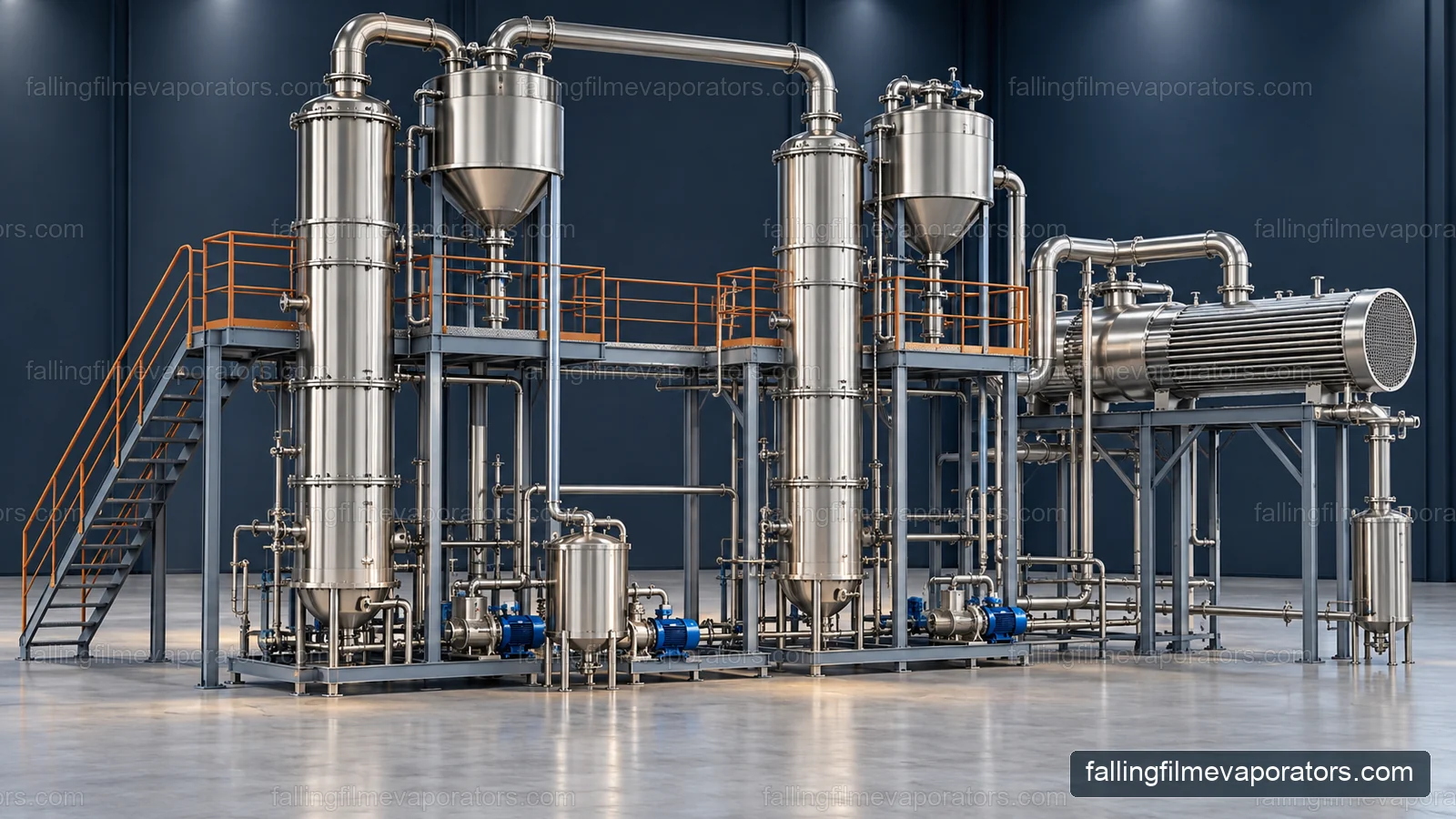 02
Compared with one effect, two effects introduce additional heating surfaces, piping and pressure-control interactions.
Compare this configuration03Increasing the number of effects can reduce external heating demand under a suitable design, while adding equipment, piping and control requirements.
Compare this configuration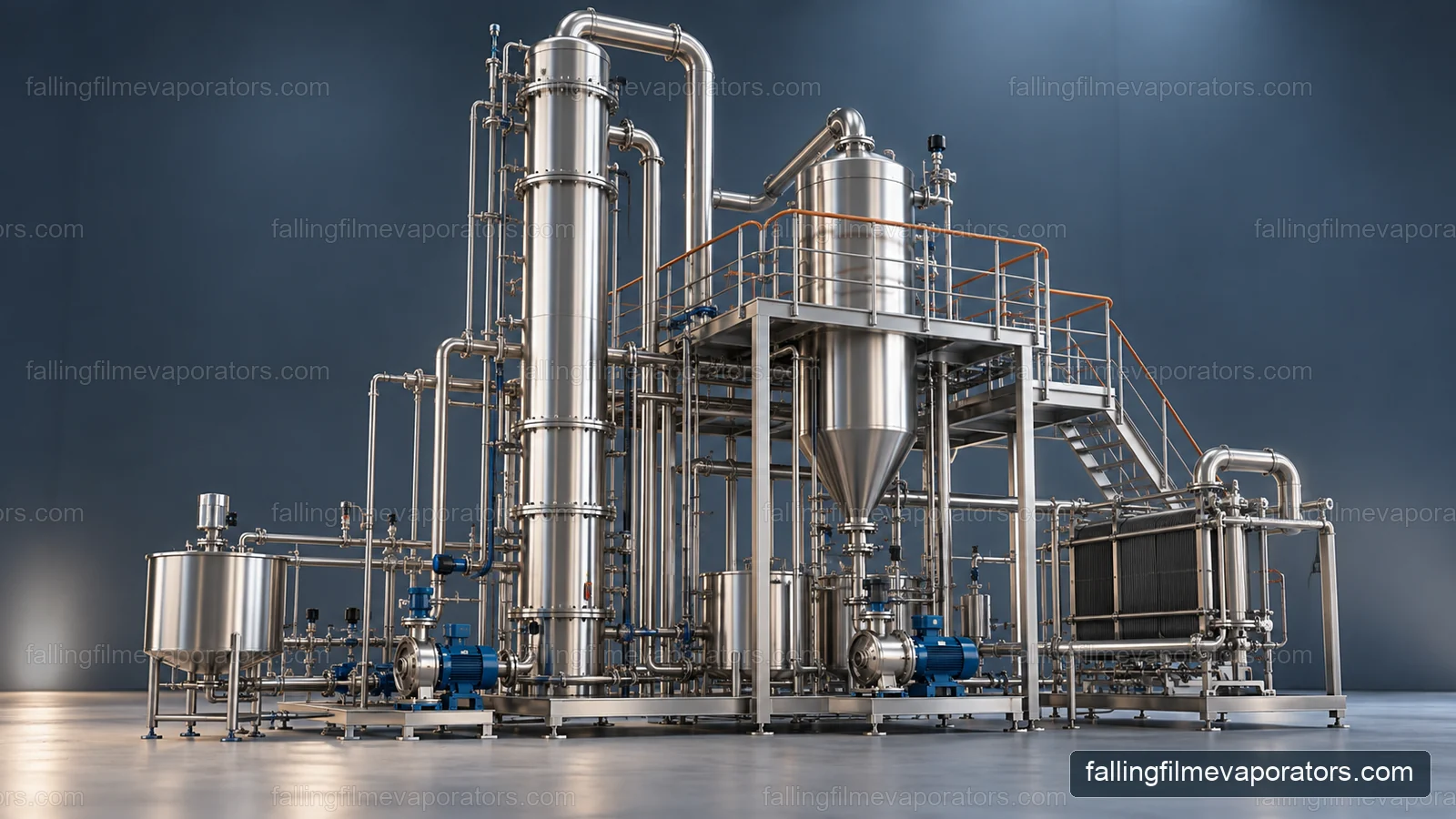 04
An MVR proposal moves a significant part of the energy discussion toward electricity and compressor operation.
Compare this configuration05TVR avoids the mechanically driven vapour compressor used in MVR, but depends directly on steam conditions and a compatible operating envelope.
Compare this configurationConfiguration illustrations are AI-generated; they are not photographs of supplied equipment.
| Configuration | Main design question | Information to prepare |
|---|---|---|
| Single effect | A clear starting configuration | Feed and final concentrate properties at operating temperature |
| Two effects | Reuse vapour in a second stage | Heating and boiling temperatures for each effect |
| Multiple effects | A staged heat-recovery arrangement | Feed, final solids and a complete effect-by-effect balance |
| MVR heat recovery | Mechanical vapour recompression | Required vapour flow and compressor temperature lift |
| TVR heat recovery | Thermal vapour recompression | Available motive-steam pressure, quality and variability |
Materials, model designation, rated capacity and supply scope are established in the project proposal. No generic illustration is a supplied-model drawing.
Request a configuration review ↗Tell us the liquid, feed rate and concentration target. Add the utility conditions you know; we will identify what needs further review.