Single-effect falling film evaporator for food liquids
Single-effect falling film evaporation for food liquids. Review water-removal duty, vacuum, minimum wetting, steam supply and cleaning before sizing.
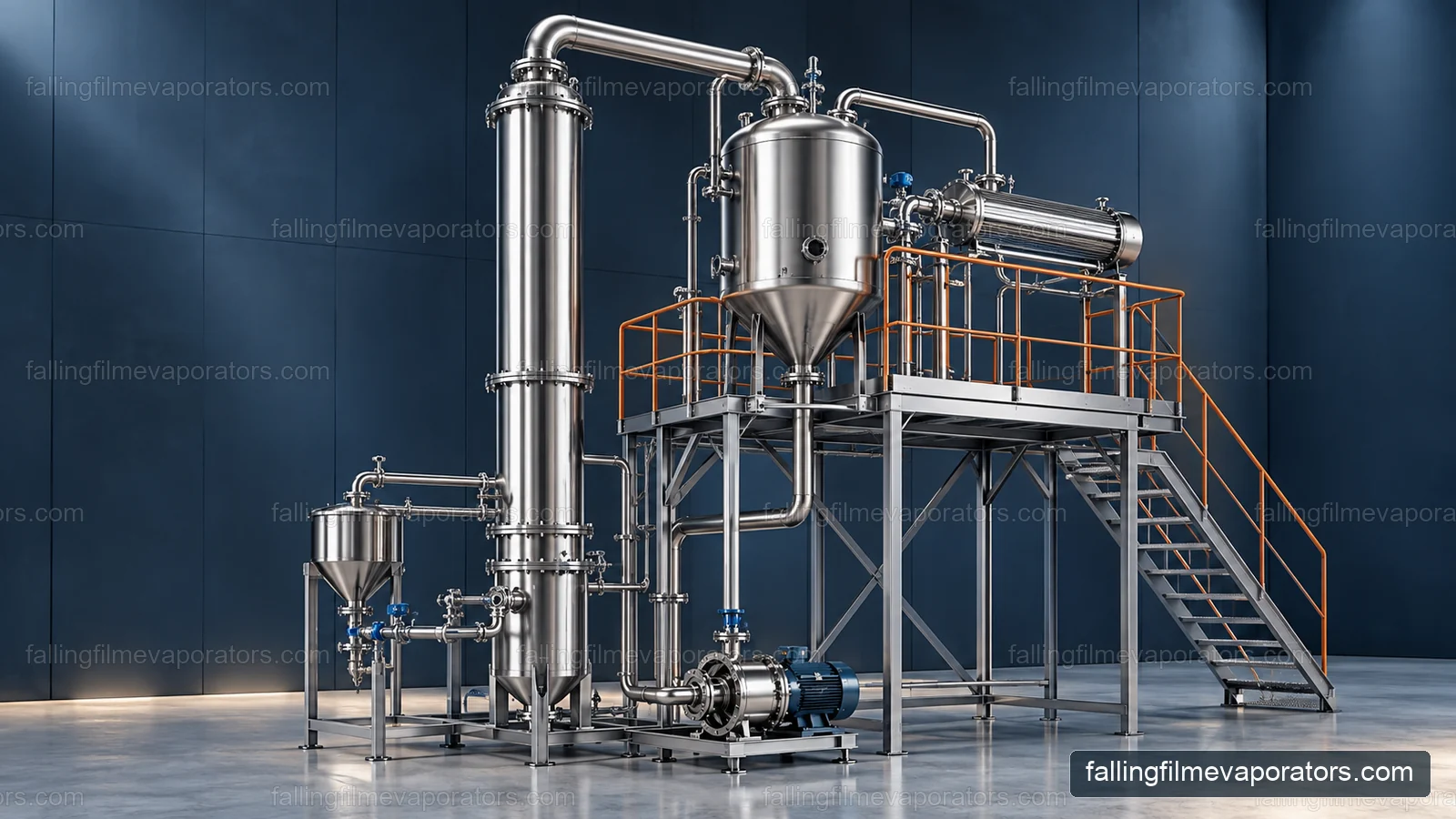
Where this arrangement fits
A single effect is a useful starting point when the duty, operating schedule and available utilities favour a simpler evaporation arrangement. It also gives a clear basis for comparing a more extensive heat-recovery proposal. Small throughput alone does not settle the choice: annual operating hours and energy prices matter too.
Discuss this configuration ↗Start with feed kg/h, inlet and final concentration, operating hours and utilities.
How the arrangement works
Heating steam condenses on one side of the vertical tubes while the product flows down the other side as a thin film. Generated vapour leaves the product through a separator and is normally condensed. The product and heating streams remain separate. Vacuum operation can lower the boiling temperature; the actual pressure and product temperature must come from the duty review.
Explore distribution, heat transfer and separation ↗What changes in the equipment decision
One effect gives a relatively direct product path, fewer inter-effect connections and a simpler temperature profile to review. Its heating requirement must still be calculated. Do not compare its steam consumption against a multiple-effect or MVR proposal unless the feed, final solids, operating hours and heat-balance boundaries are identical.
Specify these conditions
- Feed and final concentrate properties at operating temperature
- Evaporated water in kg/h, separately from feed throughput
- Steam pressure, condensate return and cooling-water conditions
- Minimum stable load and full wetting of the final pass
- Cleaning interval, access and permitted production downtime
Confirm the feed distributor, heating surface, separator, vacuum interfaces, concentrate pumping and cleaning provisions against the normal and minimum loads. A proposal should state the inclusions and exclusions explicitly.
Prepare the utility information ↗A common selection question
Is a single effect always the lowest-cost choice?
Installed complexity may be lower, but total cost depends on operating hours, utilities, maintenance and the required duty. Compare both investment scope and operating cost on the same basis.
From configuration to a project proposal
Send a representative product description and the operating data you have. The engineering review should resolve suitability, heating area, temperature profile, materials and utility consumption before a model or guarantee is agreed.
Ask for identified equipment photographs, dimensional drawings and a rated duty in the proposal. Acceptance should cover the agreed operating and product-quality conditions; successful enquiry submission is not equipment approval.