Multiple-effect falling film evaporator for food liquids
Multiple-effect falling film evaporation for food liquids. Define effect count using product temperature limits, boiling-point elevation, utilities and operating range.
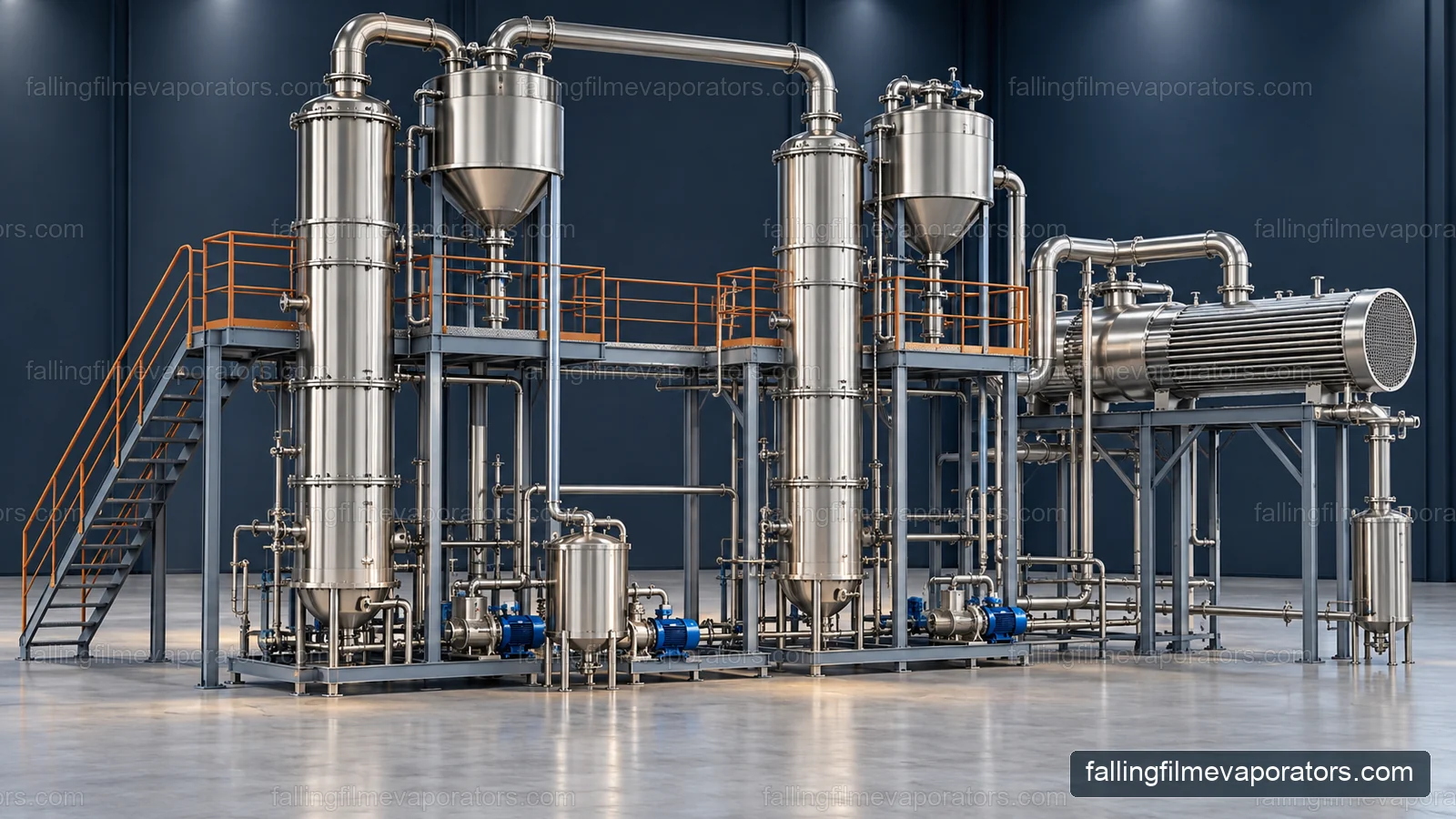
Where this arrangement fits
Multiple effects are a heat-recovery option for sustained concentration duties where the product and utilities allow several pressure and temperature levels. More effects should be justified by the operating case. The appropriate number is a design outcome rather than a product-quality label.
Discuss this configuration ↗Start with feed kg/h, inlet and final concentration, operating hours and utilities.
How the arrangement works
Vapour from an upstream effect is reused as heating medium in a downstream effect. Each effect must have enough temperature difference to transfer the necessary heat. Product routing, temperature exposure and solids concentration may differ from effect to effect, so the worst-case concentrate must be checked separately from the incoming feed.
Explore distribution, heat transfer and separation ↗What changes in the equipment decision
Increasing the number of effects can reduce external heating demand under a suitable design, while adding equipment, piping and control requirements. It also divides the available temperature span. Boiling-point elevation, deposits and reduced heat transfer at high concentration can limit the useful benefit of another stage.
Specify these conditions
- Feed, final solids and a complete effect-by-effect balance
- Available temperature span and product quality limits
- Boiling-point elevation across the concentration range
- Minimum wetting, turndown and shutdown sequence
- CIP coverage, equipment height and installation interfaces
Confirm the feed distributor, heating surface, separator, vacuum interfaces, concentrate pumping and cleaning provisions against the normal and minimum loads. A proposal should state the inclusions and exclusions explicitly.
Prepare the utility information ↗A common selection question
Can the number of effects be chosen from feed flow alone?
No. Feed flow does not establish water removal, temperature span, product rheology or energy economics. Compare effect count with those conditions stated explicitly.
From configuration to a project proposal
Send a representative product description and the operating data you have. The engineering review should resolve suitability, heating area, temperature profile, materials and utility consumption before a model or guarantee is agreed.
Ask for identified equipment photographs, dimensional drawings and a rated duty in the proposal. Acceptance should cover the agreed operating and product-quality conditions; successful enquiry submission is not equipment approval.